

ZOLEO vs T-Mobile (Satellite): Who Delivers Coverage When You Need It Most?
Choosing the right satellite communicator matters. Here’s how ZOLEO stacks up against the competition on coverage, reliability, SOS, and cost.
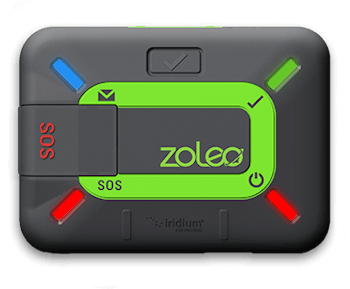
ZOLEO vs. T-Mobile: Satellite Messaging Comparison
Looking for the most reliable way to reach help or stay in touch beyond cell service? This page compares ZOLEO, a purpose‑built global satellite communicator, with T‑Mobile’s T‑Satellite (Starlink Direct‑to‑Cell) service available on select smartphones.
| Features | ZOLEO Satellite Communicator | T‑Mobile T‑Satellite |
|---|---|---|
| 100% Global Satellite Network Coverage | ||
| Two-way Messaging | ||
| Unlimited Free Check‑In Messages | ||
| Location Sharing | ||
| SOS / Emergency | Dedicated SOS button, location sharing, Medical Assist, 24/7 monitored two‑way coordination | Text‑to‑911 only, in select areas |
| Ruggedness | Military-grade durability (MIL-STD 810G), dust and water-resistant (IP68) | Consumer-grade smartphone durability |
| Battery Life | 200+ hours | 5 – 24 hours |
| Operating Temperatures | ‑20 °C to +55 °C | ~0 °C to 35 °C |
| Weather Forecasts (On Demand) | ||
| Monthly Subscription | US$20 / $35 / $50 plan tiers; SOS & Check‑In free; option to suspend service when not in use | Free on select plans, or $10/mo promo (availability varies) |
*Note: This compares ZOLEO with some other satellite communicators based on select features and should not be considered a comprehensive market comparison. Potential buyers should perform their own research to fully explore the capabilities of other devices.
When Survival Matters, ZOLEO Does What Your Phone Can’t
While T-Mobile's satellite service adds basic texting to your phone, ZOLEO was built for true safety. ZOLEO was purpose-built for no-compromise safety worldwide: a physical SOS button, long battery life, rugged design, and global Iridium coverage — plus unlimited Check-Ins and opt-in automatic location sharing with LocationShare+ to keep your loved ones informed.
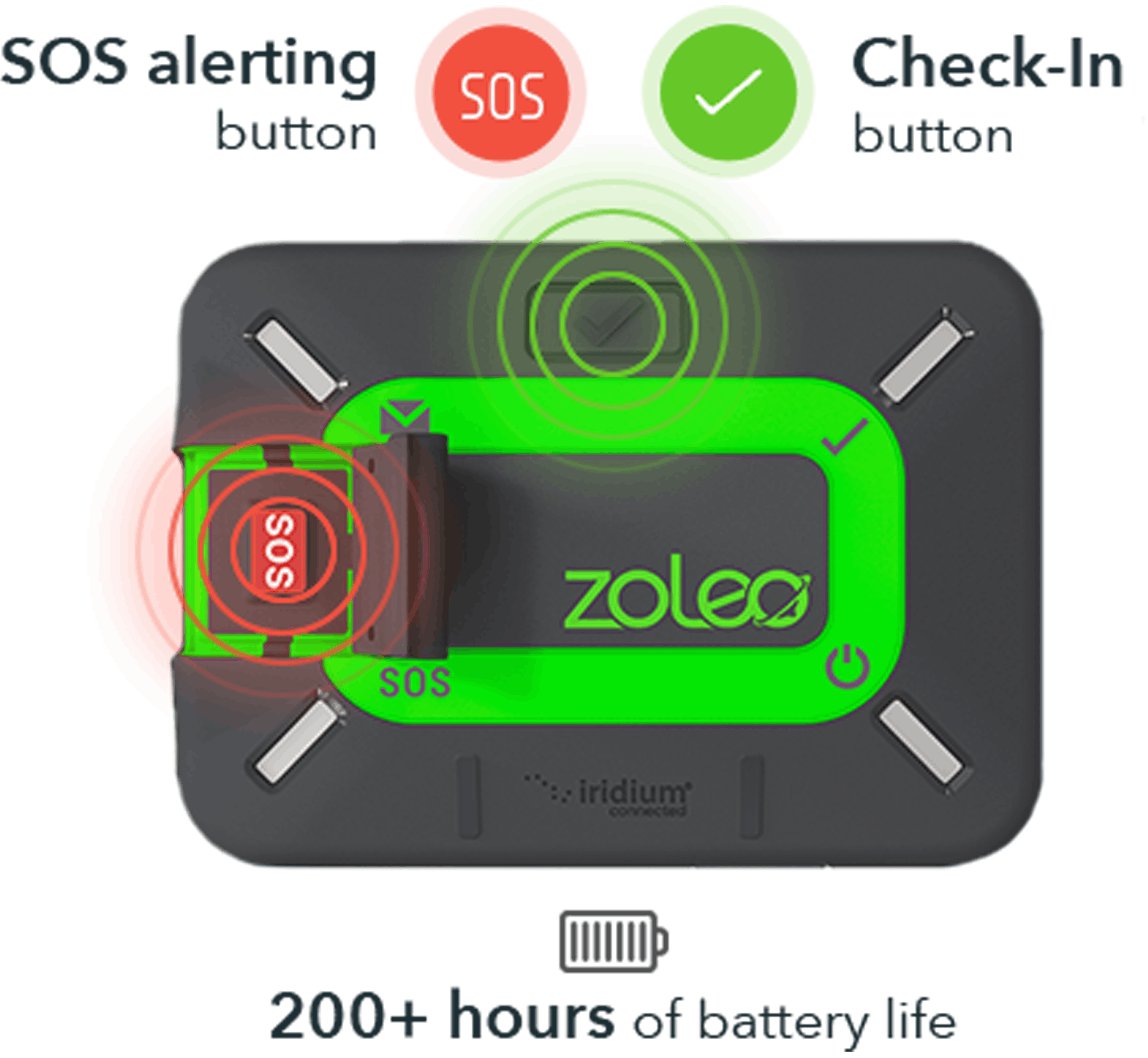
ZOLEO Offers Superior Safety With Global Satellite Coverage
With built‑in Check‑In and SOS buttons, you can depend on ZOLEO for worldwide coverage and safety, even if your smartphone is damaged or out of battery. You can also share your GPS coordinates or location track points with others.
Learn More About ZOLEO*Unlimited free check-in messages are included with all plans.
Designed for Use Outdoors
ZOLEO offers 200+ hours (8 days) of battery life, compared to 1-2 days provided by most smartphones. What’s more, ZOLEO operates in extreme cold and hot temperatures from -20°C to 55°C (-4°F to 131°F).
Extremely Durable and Shock Resistant
ZOLEO provides superior MIL-STD 810G shock resistance, in addition to IP68-rated water and dust resistance. This makes ZOLEO a durable backup to your smartphone, with its own long-lasting battery.
Non-Emergency Medical Assist
Only ZOLEO offers a 24/7 non-emergency chat service for non-emergency medical advice, help locating a clinic, hospital, pharmacy or dentist, or assistance replacing prescriptions or medical supplies.
Free Check-Ins and Location Sharing
Stay connected with peace of mind — send unlimited free Check-In messages anytime, anywhere. With automatic LocationShare+, your loved ones can follow your journey and feel reassured every step of the way.
ZOLEO Delivers True Global SOS Reliability
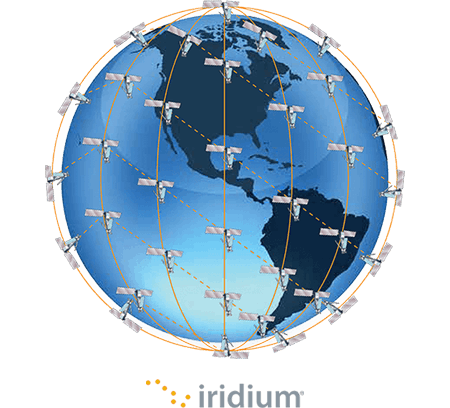
ZOLEO devices connect through the Iridium® satellite network, delivering seamless coverage everywhere on the planet — land, sea, or sky. That means your SOS function works no matter where you are.
By comparison, T-Mobile’s new satellite service is limited to the Continental U.S., Puerto Rico, Hawaii, and parts of southern Alaska. If you travel internationally, your phone’s satellite SOS function simply won’t connect.
With ZOLEO, coverage is not dependent on where cell towers reach or which latitude you’re standing in. When it matters most, you need a device that’s purpose-built for emergencies and works anywhere on Earth.
How ZOLEO Progressive SOS Works
With ZOLEO, it’s easy to trigger an SOS in the case of an emergency. Progressive SOS by ZOLEO is easy to use, providing immediate, reliable SOS alerting and ongoing communication with emergency responders until help arrives.
What ZOLEO Users Are Saying
Don’t just take our word for it. Here is what ZOLEO users say about their experience during an emergency.
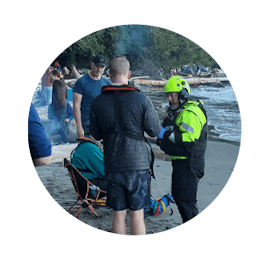
Hiker Breaks Ankle
That day could have gone so badly, but it ended well thanks to ZOLEO. It was a flawless experience.
Read the Rescue Story

Frequently Asked Questions
ZOLEO vs T‑Mobile coverage — what’s the difference?
ZOLEO coverage is truly global (Iridium). T‑Mobile is U.S. regional (continental U.S., Puerto Rico, Hawaii, and parts of southern Alaska), expanding over time.
ZOLEO vs T‑Mobile satellite messaging — what can I actually send?
Both support two‑way text. ZOLEO also supports email and app‑to‑app messaging, plus unlimited free Check‑Ins to predefined contacts. T‑Satellite focuses on SMS (with limited media on some devices).
Which is better for backcountry use ZOLEO or T-Mobile?
For dependable backcountry coverage and safety, choose ZOLEO. It’s a purpose-built satellite communicator that transmits messages via the Iridium network and gives you: global reach, a dedicated SOS device that works even when your phone can’t, multi-day battery life, Medical Assist for non-emergency advice, and automatic location sharing.
T-Mobile’s phone-based satellite features can be a lightweight fallback for occasional messaging in supported U.S. areas on compatible phones, but they rely on your phone’s battery and durability and aren’t a dedicated SOS device.
Bottom line: If you go beyond cell coverage, or beyond the U.S., ZOLEO is the safer pick.
T‑Mobile satellite phone vs ZOLEO messenger — are they different things?
Yes. T‑Satellite uses your smartphone (with its durability and battery limits). ZOLEO is a rugged satellite communicator with its own long-lasting battery, SOS button with 24/7 emergency monitoring, check-in button and Iridium satellite coverage, designed to work both independently and with your smartphone.
What’s the best alternative to T‑Mobile satellite texting?
ZOLEO isn’t just an alternative — it’s a different class of safety device with truly global reach, a dedicated SOS workflow and Medical Assist for non-emergency medical advice or help. If you only need U.S.‑regional texting and already carry a compatible smartphone, T‑Satellite may be enough, depending on your use case.
Does T‑Mobile offer satellite service?
Yes. T‑Satellite (powered by Starlink Direct‑to‑Cell) lets compatible smartphones send/receive texts beyond cellular coverage. Text‑to‑911 is supported where available.
Is T‑Mobile already using Starlink?
Yes — T‑Satellite uses Starlink Direct‑to‑Cell for connectivity.
How much does T‑Mobile’s satellite service cost?
Select plans may include access; others can add it for about $10/month (promo). Offer details and eligibility can vary.
What phones work with T‑Mobile’s satellite service?
Support varies by device. Google Messages is the satellite texting client on compatible phones. Some newer devices also support low‑res images and short voice clips; Pixel 10 enables satellite data for select apps.
Which device offers better global coverage?
ZOLEO provides complete global coverage via the Iridium satellite network, the only network that covers the entire Earth, including its oceans and polar regions. iPhone satellite coverage is not global. It is limited to specific regions where the Globalstar network has service agreements.