

When Weather Changes the Plan: El Niño, Severe Weather and Going Off-Grid
Six real stories where storms, flooding, and heat changed the original plan, and how preparedness helped create another way forward.
El Niño is strengthening, with a greater than 90% chance of a very strong event during the Northern Hemisphere fall and winter 2026-27.
NOAA Climate Prediction Center, ENSO Diagnostic Discussion, 13 August 2026
Explore how ZOLEO can help protect you and keep your Safety Circle, your friends, family, and loved ones, connected when plans change.
Discover ZOLEOHow El Niño can affect off-grid travel
El Niño can shift weather patterns and increase the likelihood of certain temperature and precipitation extremes in different parts of the world. It doesn't mean every location will experience severe weather, or tell you exactly what conditions you'll encounter on a particular trip.
For people travelling, working or living remotely, the bigger issue is what happens when weather removes the options you normally rely on.
A river rises and blocks the way back. Snow hides the trail. A storm grounds the rescue helicopter. Extreme heat makes the remaining distance impossible. A hurricane knocks out roads, power and cellular service, turning your own home into an off-grid location.
That's when preparedness matters most, not because it lets you predict what will happen, but because it gives you and the people looking out for you another option when plans change.
ZOLEO is designed as a Safety and Preparedness Platform that brings together the device, app, satellite connectivity and your Safety Circle as one part of a broader preparedness plan.
Is El Niño active in 2026?
Yes. The latest monthly ENSO Diagnostic Discussion from the NOAA reported that El Niño was continuing to strengthen, with a 97% chance of persisting through early spring 2027 and an 81% chance of reaching "very strong" strength during October through December 2026.
It also cautions that even very strong El Niño events do not produce typical impacts everywhere. That distinction matters.
El Niño changes probabilities, but it doesn't write the forecast for your campsite, trail, road or community.
Local forecasts, warnings and changing conditions still determine what you actually face. And when you're remote or cut off from normal infrastructure, those changes can have much bigger consequences.
Real Story 1: When a hurricane takes your home off-grid
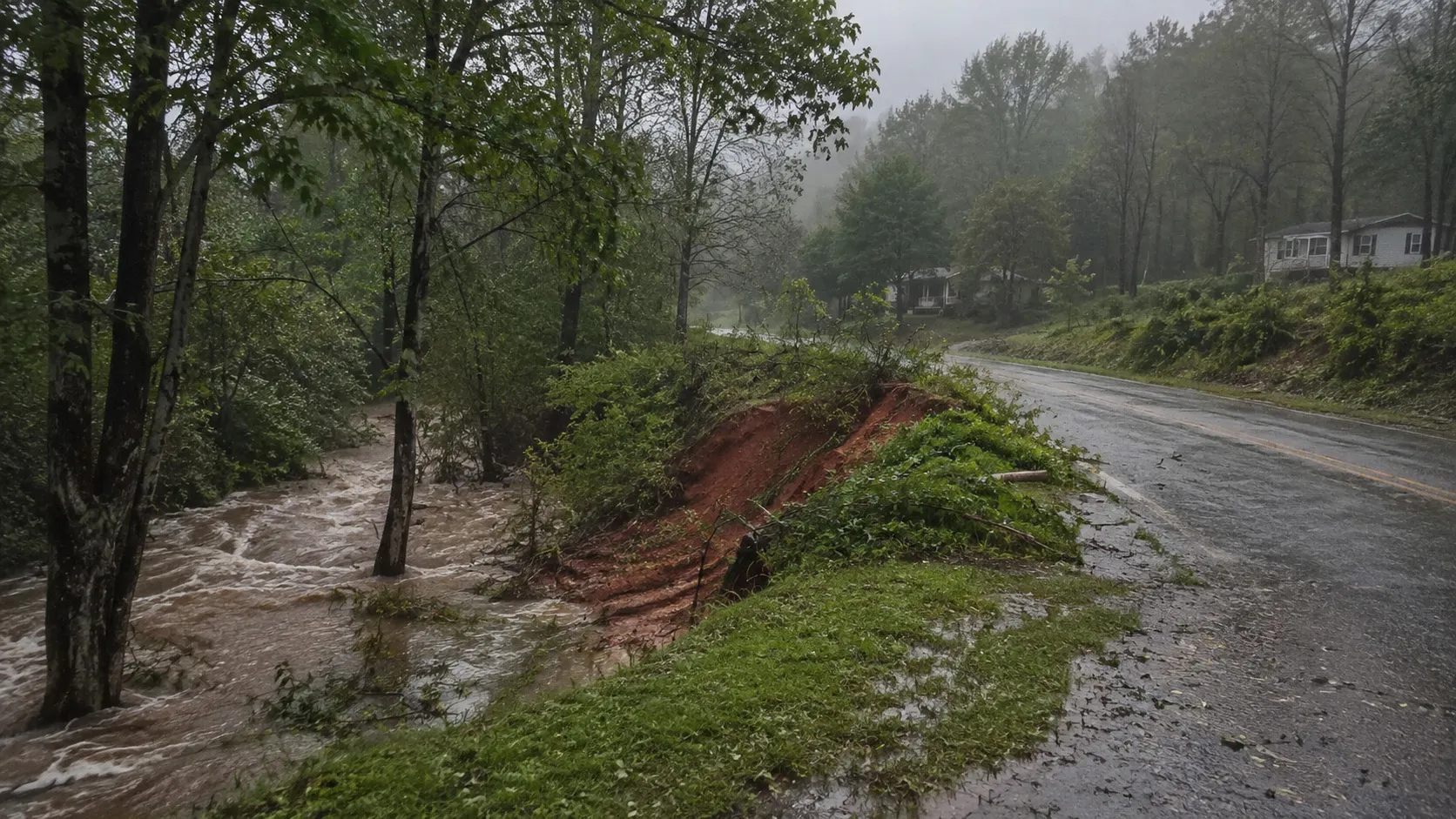
For Erin Gallimore and her family, Hurricane Helene wasn't something they expected to experience at their home in Weaverville, North Carolina.
They lived roughly 10 miles north of Asheville, more than 2,000 feet above sea level and about 300 miles from the coast. Their property wasn't in a flood zone.
Then the rain started.
For two days before the hurricane arrived, the area experienced intense rain. A creek on their property, normally only three or four feet wide, rose to the top of its banks. Then the power disappeared. So did cell service.
The family pulled out supplies they normally associated with camping: a camp stove, coolers, freeze-dried food, lanterns, a solar-panel generator and ZOLEO.
Their off-grid equipment had suddenly become their at-home emergency equipment.
They used ZOLEO to let friends, family and work know they were okay. When they checked on an elderly neighbour living alone, they discovered a fallen tree was funnelling water into her basement. She was able to use Erin's ZOLEO to contact her own worried family.
Outside, fallen trees and utility poles blocked the roads. The family didn't see signs of outside relief for four days.
They went 10 days without cell service, 15 days without power and 20 days without clean water.
For those first 10 days, ZOLEO helped them stay connected with people outside the affected area and receive information while the situation continued to evolve.
For Erin, remote isn't always somewhere you choose to go. Severe weather can make where you already are remote, and preparedness can help keep you connected to the people who need to know you're safe.
“Being able to message my parents out of state was such a relief. Even sending simple messages like ‘goodnight’ made a difference.”
What Erin's story teaches us
- Prepare for the aftermath, not just the storm.
- Keep essentials such as water, shelf-stable food, first aid and backup power available.
- Have a reliable form of communication and create a plan to receive information as well as send it.
- Make sure your household has a way to stay connected with the people who will be checking on you if normal networks fail.
Real Story 2: What happens when rising water removes the way out?
Livia was hiking the Te Araroa Trail in New Zealand when she reached an enormous braided river system.
The crossing involved a riverbed approximately five kilometres wide with 15 separate braided crossings. She made it through 14.
At the final and largest crossing, Livia lost her footing and was swept into the river. She managed to get back to shore while holding onto her backpack, but the current took her tent, water filter and hiking poles.
The immediate crisis was over. Her situation, however, wasn't getting safer.
As Livia searched for another safe crossing, the rain continued and the water rose significantly. Without her hiking poles, she was unstable and continued falling as she tried to move through the area.
The problem had changed. She wasn't seriously injured, but her equipment was compromised and her safe options were disappearing.
Livia activated SOS* on her ZOLEO. Global Rescue contacted the New Zealand Rescue Coordination Centre, which reached a contractor near her coordinates. Help arrived at her location in about 45 minutes. Responders determined that conditions made it unsafe for her to continue, and she was evacuated by helicopter.
“It was difficult to admit that I needed help, but once I activated my ZOLEO, a huge weight lifted from my shoulders.”
What Livia's story teaches us
- You don't have to wait until you're hurt for deteriorating conditions to become an emergency.
- Watch where conditions are heading. Loss of necessary equipment and rising water can quickly change your safety margin.
- Be willing to change the plan early before your situation becomes trickier to navigate.
Real Story 3: What happens if you’ve called for help, but weather changes the rescue?
David and Sue were hiking the Northover Ridge Loop in Kananaskis, Alberta, when snow began getting deeper. Eventually, the trail disappeared beneath it.
They continued through strong winds and hail until they reached the summit and saw what lay ahead: steep, jagged terrain covered in snow and ice.
Continuing didn't look safe.
They activated SOS* using their ZOLEO and connected with Global Rescue. But sending an SOS couldn't remove the storm or terrain.
Landing a helicopter on the mountain in those conditions could put both the hikers and rescue crew at greater risk. So the plan changed.
David and Sue began backtracking toward the valley while remaining in two-way communication with the emergency dispatcher. Their location continued to update so the rescue team could follow their progress.
Eventually, they reached terrain where the helicopter could safely meet them. Communication continued through the final stage of the rescue.
“It was so reassuring to have someone with us throughout the entire situation. Our Global Rescue agent was there until the very end, guiding us to safety when we needed it the most.”
What David and Sue's story teaches us
- SOS starts a response. It doesn't guarantee immediate extraction. Weather, terrain and visibility can affect how rescuers reach you.
- Pack enough to shelter, move or wait safely, and have a way to maintain communication so you and those coordinating your rescue can adapt together.
Real Story 4: How do you stay put when a storm adds 15 hours to an emergency?
Matt was on an eight-day solo canoe trip in Eastern Temagami, Ontario.
On Day 5, he slipped on wet rock while scouting a portage around difficult rapids and struck his hand against a jagged submerged rock.
The cut was deep, painful and wouldn't stop bleeding. Matt was alone, with miles of rugged terrain between him and outside help.
He activated SOS* on his ZOLEO and began exchanging messages with a Global Rescue operator.
While waiting, Matt established a stable camp with shelter, food and water, monitored his injury and focused on staying calm.
Then another problem arrived. A storm delayed his rescue by 15 hours.
Matt continued communicating with first responders throughout the delay. Only when the weather broke could he be safely evacuated. His injury ultimately required surgery to repair nerve damage in his hand.
“The storm delayed help by 15 hours but being able to send messages and get advice made a world of difference. I wasn’t just waiting; I felt supported and in control of the situation.”
What Matt's story teaches us
- You need a plan for the emergency, and for the wait after it. Assume help may take longer than you hope. Prioritize packing shelter, first aid, food, and water.
- Pack a reliable way to communicate as your condition, the weather and the rescue plan change.
Real Story 5: How can strong winds become the emergency?
Sometimes there isn't a separate accident.
Jeremy Saunier was trekking across Iceland when a sandstorm hit with winds exceeding 58 mph. He was exposed in wide-open terrain and hours from the nearest town.
Jeremy stopped trying to make progress. He found shelter behind large rocks and activated SOS* on his ZOLEO.
He received ongoing SOS updates through the ZOLEO app while local search and rescue worked toward his location. Within hours, rescuers reached his coordinates and brought him to safety.
The conditions were the emergency.
What Jeremy's story teaches us
- Extreme wind, precipitation, heat, cold or poor visibility can strand someone who isn't injured at all.
- Know when sheltering is safer than continuing and keep emergency communication equipment somewhere you can reach quickly.
Real Story 6: What happens when you prepare for the heat but your safety margin still disappears?
When Braxton Johnson and a friend set out for Lake Powell in Southern Utah, Braxton knew water would matter.
He brought nine liters (about 2.5 gallons) for a 15-mile (24 kilometer) hike.
Within the first six hours, he had consumed 6.5 liters. By the time they reached camp, he had started experiencing muscle cramps.
The next morning, they began the roughly eight-mile return journey. Braxton was already thirsty and rationing what remained. About halfway back, he was down to roughly 10 ounces and had become extremely tired.
His hiking partner continued toward the vehicle to bring water back. After they separated, Braxton recognized the risk: in the scorching heat, he didn't believe he could safely wait several hours for his friend to return.
Braxton had planned for water, but the environment consumed his safety margin faster than expected.
He used ZOLEO to communicate with his family and then activated SOS*. Glen Canyon Park Rangers were dispatched and reached him about an hour later. Responders provided water and electrolytes and returned him to the trailhead.
“I would have been in a really, really bad position had I not had my ZOLEO with me that day.”
What Braxton's story teaches us
- Watch for early warning signs, such as heat, exertion, terrain and delays.
- If your group separates, make sure the person staying behind can still communicate with the people looking out for them and call for help if the situation worsens.
The common thread between all six stories
Conditions changed faster than the original plan could handle.
- Erin wasn't camping. Severe weather made her home off-grid.
- Livia wasn't seriously injured after reaching shore. Rising water kept removing safe options.
- David and Sue successfully called for help. The weather still prevented a helicopter from reaching their original location.
- Matt's rescue was underway. A storm added another 15 hours.
- Jeremy hadn't suffered a separate accident. The weather itself made continuing unsafe.
- Braxton brought nine liters of water. Extreme heat consumed his safety margin faster than expected.
Severe-weather preparedness shouldn't be built around predicting exactly what will happen. It should be built around preserving options when the expected one stops working.
The outcomes in these stories are specific to each incident. Activating SOS begins emergency response coordination, but it does not guarantee rescue, response time, evacuation or any particular outcome.
Six principles for severe-weather preparedness
- Expect conditions to change. Watch trends in water, wind, temperature and visibility rather than relying only on what conditions looked like when you started.
- Know what will make you turn back. Decide before you leave what conditions, equipment failures or warning signs will cause you to change the plan.
- Prepare for delays. Carry enough shelter, food, water, first aid, clothing and power to remain self-sufficient if help can't reach you immediately.
- Plan for communication beyond cellular coverage. Make sure you can contact others and receive information if normal networks become unavailable.
- Keep your Safety Circle informed. Family, trip contacts and others responsible for your wellbeing should know your plan, expected return and how they'll hear from you if circumstances change.
- Preserve options. A safe turnaround route, extra supplies, shelter and dependable communication can give you another course of action when the original one disappears.
A practical severe-weather and off-grid check
Before leaving:
- Check official local forecasts, warnings and alerts.
- Understand hazards specific to the terrain and season.
- Identify turnaround conditions before starting.
- Tell someone in your Safety Circle where you're going and when you expect to return.
- Carry appropriate shelter, clothing, first aid, food and water.
- Carry backup power appropriate to the length of your trip and possible delays.
- Charge your phone and ZOLEO.
- Confirm your ZOLEO service is active.
- Pair the ZOLEO app and verify your contacts.
- Keep ZOLEO somewhere you can reach quickly.
- Send a check-in or test message from an appropriate outdoor location before relying on the device remotely.
- Consider what you'll need if help is delayed overnight or longer.
ZOLEO is one part of a broader safety plan. It doesn't replace weather awareness, appropriate gear, judgment, or preparation.
As a Safety and Preparedness Platform, ZOLEO helps you stay connected with your Safety Circle (your friends, family, and loved ones), exchange information and reach emergency support when normal communication isn't available.
Prepare for the moment the plan changes
- You can't control whether the river rises after you cross it.
- You can't make a helicopter land in unsafe weather.
- You can't restore a cell tower after a storm.
- You can't guarantee that nine liters of water will be enough in extreme heat.
- And you can't know exactly how El Niño will affect every trip or community months in advance.
What you can do is build another option into the plan.
A way to shelter. A way to turn back. Extra time and supplies. A way to reach the people who are looking out for you when the cell network isn't there. And the willingness to change course before conditions make the decision for you.
El Niño continues and will strengthen through the end of the year.
NOAA Climate Prediction Center, ENSO Diagnostic Discussion, July 9, 2026
Frequently asked questions
Does El Niño cause extreme weather?
El Niño changes large-scale atmospheric circulation and can shift the likelihood of certain temperature and precipitation patterns in different regions. It doesn't mean every storm, flood, drought, heat event or wildfire during an El Niño period was caused by El Niño.
Why can severe weather be more dangerous when you're off-grid?
Remote and isolated locations typically leave fewer alternatives when conditions deteriorate. A flooded crossing can eliminate your route out. Rescue crews may have farther to travel. Aircraft operations can be affected by weather and terrain. Normal cell coverage may also be unavailable.
Can severe weather delay a rescue after an SOS has been sent?
Yes. Matt's evacuation was delayed by 15 hours because of a storm. David and Sue also had to move toward the valley because conditions made landing at their original location unsafe.
Sending an SOS begins the response process. Conditions on the ground still influence how and when rescuers can reach you.
Should you call SOS if you aren't injured?
An emergency doesn't always begin with an injury. Livia reached shore without serious injury, but rising water and lost equipment made continuing increasingly unsafe. Jeremy was also uninjured when extreme wind made continued travel unsafe.
Whether a situation requires emergency assistance depends on the circumstances. Injury shouldn't be your only measure of risk.
Can severe weather make a normal home effectively off-grid?
Yes. After Hurricane Helene, fallen trees and utility poles blocked roads around the Gallimore family's North Carolina home. They lost cell service for 10 days, power for 15 days and clean water for 20 days.
Their experience shows that off-grid preparedness isn't only for wilderness travel.
How should you plan to communicate beyond cell coverage?
Your communication plan should include a method that works where you intend to travel and enough power to keep it operational through your trip and possible delays.
ZOLEO is a Safety and Preparedness Platform designed to help you stay connected to your Safety Circle beyond cellular coverage, with two-way messaging and access to SOS communication as part of a broader preparedness plan.
Learn more about how ZOLEO SOS works.
* SOS & Emergency Response Coordination: SOS alerts are monitored by a third party emergency response coordination provider. ZOLEO is not a licensed emergency dispatch service and does not guarantee rescue, response, evacuation, medical assistance, security assistance, search and rescue availability, or coordination with local emergency authorities.
Coverage & Connectivity: Satellite communication requires a clear view of the sky. Connectivity is not guaranteed and may be affected by satellite availability, terrain, weather, environmental conditions, device positioning, and other factors outside ZOLEO’s control. Coverage details apply.
Subscription Required: Active subscription required. An active ZOLEO subscription plan is required to transmit messages or use connected features over the Iridium satellite network.
Legal/Jurisdictional: Some jurisdictions regulate or prohibit the use, possession, or activation of satellite communication devices. Users are responsible for knowing and complying with all applicable laws and restrictions in each jurisdiction where the device is used, carried, or activated.
Additional Costs: Additional third party costs may apply.