

Best Satellite Communicator for Overlanding: What Matters on Remote Roads
Prepare for remote roads with a plan that keeps you and the people counting on you connected.
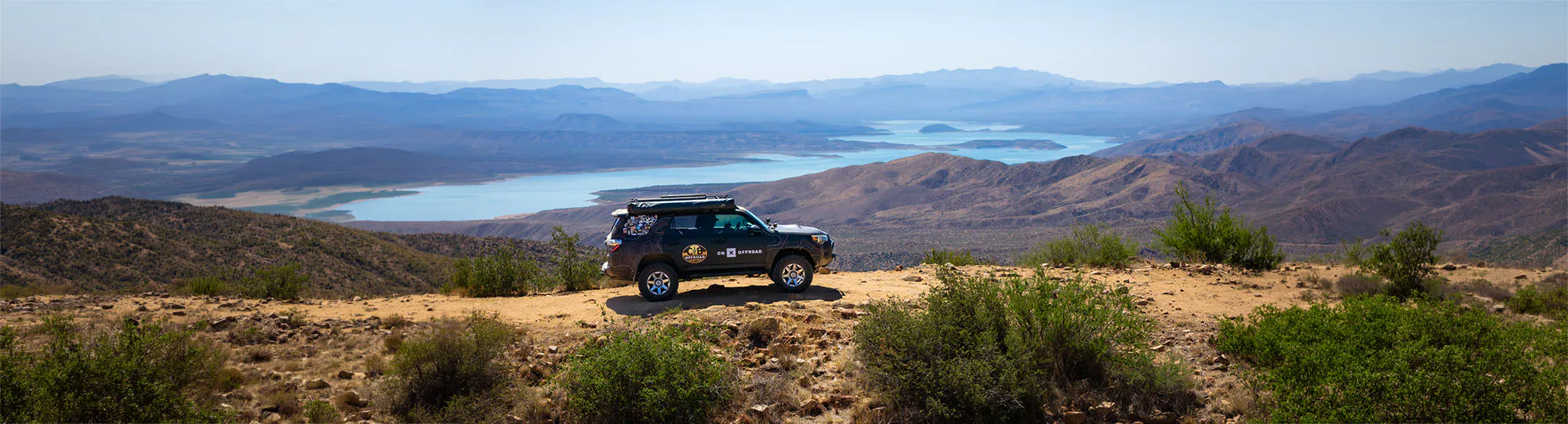
Overlanding can take you along logging roads, across desert tracks and over mountain passes to remote campsites, leaving you without reliable cell coverage for hours or days. That freedom is part of the appeal. So is self-reliance, and knowing how you’ll reach help when you need it is part of being prepared.
When a breakdown, road closure, injury, or change of plan interrupts your trip, having a dependable way to explain what changed, ask for help if needed, and reassure the people expecting you to come home makes a huge difference.
Why Do Overlanders Need a Different Kind of Communication Tool?
Vehicle-based travel creates a different communication problem from a short-day hike. You can cover hundreds of kilometres in a day, move between very different terrains, and end up far from the last place anyone saw you. Routes can change because of weather, fuel, road conditions, or mechanical issues. You may also leave the vehicle to scout for a route, hike, fish, hunt or explore on foot.
A strong overlanding preparedness plan should help you adapt when conditions change, reach help when you need it and keep your Safety Circle informed. These are the family, friends and loved ones counting on you to come home. Agreeing how you will stay in touch, and giving them a way to reach you too, helps prevent a delayed arrival or route change from becoming hours of uncertainty at home.
What Features Matter Most in a Satellite Communicator for Overlanding?
1. Stay Reachable Beyond Cell Coverage
Coverage is the first filter. If your route crosses remote highways, forest roads, deserts, mountain valleys or sparsely populated regions, check which satellite network the device uses and whether it covers the places you travel.
ZOLEO uses the Iridium® satellite network for global coverage. Satellite devices still need a usable view of the sky, so placement matters.
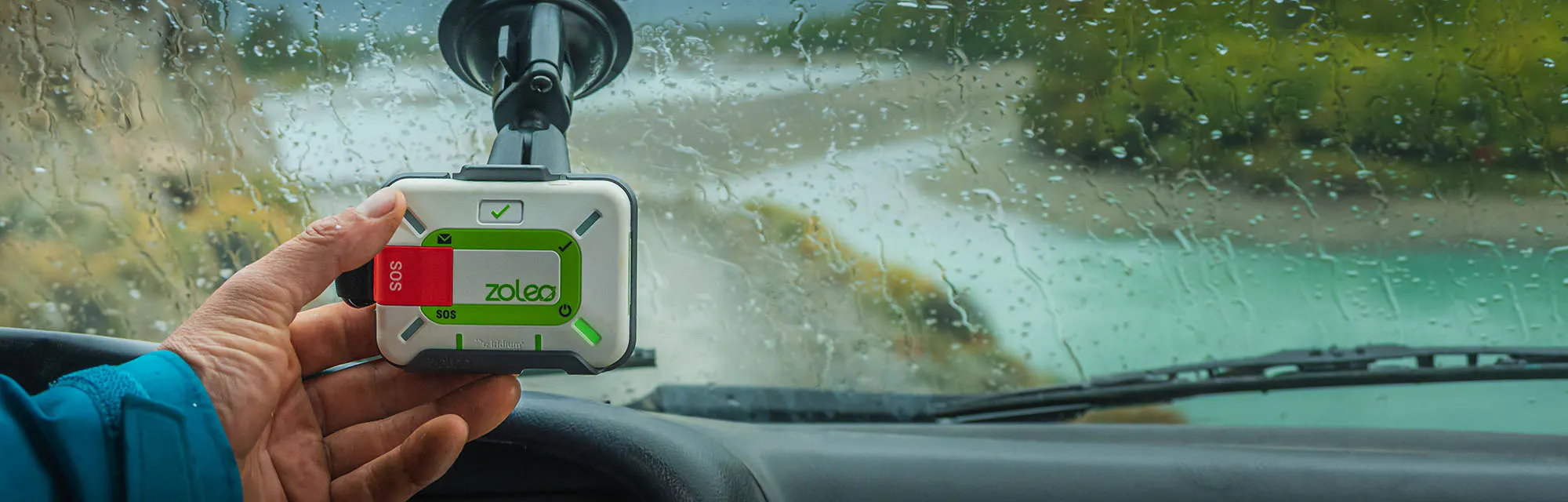
TIP! Inside a vehicle, keep the device close to a windshield or window rather than buried under gear or surrounded by metal.
See Getting Started with Satellite Messaging for practical connection tips.
2. Keep Each Other Informed When Plans Change
Overlanding plans rarely stay perfectly fixed. A road may be washed out, a campsite may be full, or a repair may delay your arrival by hours. Two-way messaging lets you do more than signal “I am okay.” It lets you explain the change, receive a reply and coordinate what happens next.
ZOLEO gives each activated device a dedicated SMS number and email address, so your Safety Circle has a direct way to reach you. With the ZOLEO app paired, messages can move across cellular, Wi-Fi and satellite coverage as your trip moves in and out of service.
3. Trigger SOS Even Without Your Phone
In an emergency, fewer steps matter. Look for a communicator with a dedicated SOS control and a clear response process. It is also worth checking whether SOS can still be triggered if your phone is damaged, dead or inaccessible.
ZOLEO has a dedicated SOS button on the device, so you do not need a functioning phone to send an SOS. When the app is available, you can also exchange messages with the emergency response team and receive progressive status updates.
Did you know? During an active SOS, ZOLEO shares your location and your device’s battery level with responders every 6 minutes until the situation is resolved.
Review ZOLEO SOS Best Practices before your next trip.
4. Help Your Safety Circle Follow Your Progress
A late arrival can look very different from home than it does from the driver’s seat. ZOLEO Track gives supported device activity a map view in MyZOLEO, and shared Track links let trusted contacts follow along without needing their own ZOLEO account or app.
For trips where you want a clearer breadcrumb trail, Location Share+ can send automatic location updates at a selected interval. That can reduce the need to stop and manually explain every route change while giving the people counting on you more context.
Learn more about ZOLEO Track.
5. Stay Connected Through Multi-Day Trips
A long driving day often becomes a multi-day trip. A communicator should have enough battery life that charging becomes routine maintenance instead of a constant concern. ZOLEO is rated for over 200 hours of battery life under typical conditions, and the ZOLEO 1500 uses USB-C charging for easier compatibility with common vehicle and power-bank setups.
6. Stay Equipped for Dust, Rain, and Rough Roads
Overlanding gear gets bounced, dropped, dusty and wet. ZOLEO is IP68 rated for dust and water protection and tested to MIL-STD-810G for shock resistance. This means that your ZOLEO can survive being submerged in water for up to 1.5 metres deep for 30 minutes.
Those specifications do not replace basic care, but they matter when a device is carried outside a climate-controlled cabin.
7. Make More Informed Decisions When Weather Changes
Weather can turn a pass, washboard road or desert track from manageable to unsafe. The ZOLEO app provides on-demand weather forecasts for selected locations, giving you another input when deciding whether to continue, wait, reroute or make camp early.
8. Keep Help Within Reach Away From Your Vehicle
Do not treat a satellite communicator as a vehicle-only accessory if your trip includes time away from the vehicle. A device left on the dash cannot help you if you are scouting a crossing, hiking from camp or dealing with an incident somewhere else. Keep it accessible while driving, then carry it with you when you leave the vehicle.
How Should You Set Up a Satellite Communicator Before an Overlanding Trip?
A few minutes of preparation can prevent most avoidable communication problems. Before you leave cell coverage:
- Update, charge and test. Confirm the ZOLEO app is current, charge the device fully, pair it to your phone and send a test message with a clear view of the sky.
- Set expectations with your Safety Circle. Agree on your route, likely overnight stops, check-in rhythm and what family or friends should do if you miss an expected update. Give one person responsibility for holding the plan, including when to act and who to contact. You commit to checking in and sharing changes; they commit to watching for those updates and following the agreed plan if you do not respond.
• Use the Use the ZOLEO Trip Plan to write down the details and leave a copy with your designated contact. Download the ZOLEO Trip Plan - Share your Track view. If you are using ZOLEO Track, send the secure link before coverage disappears so the people following know where to look.
- Keep the device sky-aware. In the vehicle, place it near a windshield or window rather than under metal or inside a packed console.
- Take it when you leave the vehicle. Clip or carry the communicator when you scout, hike or move away from camp.
- Know the SOS process before you need it. Review how to send and cancel an SOS, and make sure everyone travelling with you knows where the device is.
For the full pre-trip routine, use the ZOLEO knowledge base guide How To Prepare ZOLEO For a Trip.
Which ZOLEO Plan Fits an Overlanding Travel Style?
The best plan depends on how often you travel and how much satellite messaging you expect to use. The device does not become more capable on a higher plan; what changes is the messaging allowance and how much you need to think about usage.
Weekend or Occasional Overlander
Prepare includes 50 satellite messages per month and is usually the better fit when most communication is occasional: arrival updates, a few route changes, weather requests and periodic Check-Ins.
Frequent or Long-Range Overlander
Protect includes unlimited satellite messaging, making it easier to communicate freely on longer trips or when you are beyond cell coverage often. It also includes unlimited satellite Check-Ins and Medical Assist messaging.
Trips Where People at Home Want More Visibility
Location Share+ is an optional add-on for automatic breadcrumb updates in ZOLEO Track. It can be useful on longer routes where your Safety Circle wants to follow progress without waiting for manual updates.
Current plans begin with three months of continuous coverage. After that initial period, you can pause service between travel seasons.
See ZOLEO Monthly Plans for current local pricing, message rules and terms.
Quick answer: There is no single best satellite communicator for every overlander.
The right device should provide reliable satellite coverage, true two-way messaging, monitored SOS, long battery life, rugged hardware, and a practical way for the people at home to follow your progress. ZOLEO is especially well suited to overlanding because it combines global Iridium® connectivity, two-way messaging, 24/7 SOS monitoring, over 200 hours of battery life, military-grade dust and shock resistance, superior water resistance, weather forecasts, and more.
How ZOLEO Fits Into a Responsible Overlanding Preparedness Plan
ZOLEO is a strong fit for overlanders who want communication and safety to stay simple. It does not try to replace your navigation app, paper maps, recovery gear, weather judgement or trip plan. Instead, it helps you stay connected to the people who matter and better prepared when cell coverage is unreliable or unavailable.
- Use your normal navigation tools for route finding.
- Use ZOLEO to keep two-way conversations going beyond cell coverage.
- Use Check-Ins and ZOLEO Track to keep your Safety Circle informed.
- Use weather forecasts as one input when conditions are changing.
- Use the dedicated SOS feature for genuine emergencies.
That division of labour is useful on remote road trips because every tool has a clear job. Your communicator does not have to do everything. It has to do the communication and safety job reliably when the phone network cannot.
Frequently Asked Questions
Do satellite communicators work from inside a vehicle?
They can, but placement matters. A satellite communicator needs a useful view of the sky. Keep ZOLEO near a windshield or window and avoid burying it under gear or enclosing it beneath metal.
Do I need cell coverage to use ZOLEO while overlanding?
No. With an active service plan and satellite connectivity, ZOLEO can send and receive supported communications through the Iridium® satellite network beyond cell coverage. When paired with the app, messaging can also use Wi-Fi or cellular when those networks are available.
Can my family follow my overlanding trip without owning a ZOLEO?
Yes. ZOLEO Track shared links can let trusted contacts view supported device activity without needing a ZOLEO account or app. Location Share+ adds automatic breadcrumb updates when you want more frequent location visibility.
Can I send an SOS if my phone is dead?
Yes. ZOLEO has a dedicated SOS button on the device, so an SOS can be triggered without a functioning phone. The device also has a standalone Check-In button.
Is ZOLEO rugged enough for overlanding?
ZOLEO is rated IP68 for dust and water protection and tested to MIL-STD-810G for shock resistance. It is designed for outdoor and remote use, although it should still be carried and mounted responsibly.
How long does a ZOLEO battery last?
ZOLEO is rated for over 200 hours of battery life under typical conditions. Actual battery life varies with message-check settings, usage, temperature, satellite conditions and other factors.
Which ZOLEO plan is best for a long overlanding trip?
If you expect frequent satellite communication, Protect removes the need to manage a monthly satellite-message allowance. For occasional trips and lighter messaging, Prepare may be more economical. Compare current ZOLEO plans before you activate.
Bottom line: For overlanding, preparedness works best when everyone knows their part. You plan the route, carry suitable equipment and keep your Safety Circle updated. They know when to expect a message, how to reach you and what to do if you miss an agreed update. ZOLEO supports that shared responsibility with messaging, location sharing and SOS, helping you and the people counting on you feel better prepared for the journey.
Explore ZOLEO Track, compare ZOLEO plans, or review the ZOLEO Satellite Communicator before your next remote road trip.
Help Someone Stay Prepared.
Share this with your Safety Circle or the person building the next trip plan, so everyone knows how you will stay connected when the road leaves cell coverage behind.